At the heart of every kitchen, whether domestic or professional, lies an indispensable element: the knife. More than just a simple tool, a good knife is an extension of the cook’s hand, allowing for precision, efficiency, and, above all, safety in every cut. Choosing the right types of kitchen knives can completely transform your culinary experience, facilitating everything from the finest chopping to the most complex butchering.
We can differentiate the traditional knife from the kitchen knife based on various criteria such as the size of its blade or the use we are going to give them. A proper set of knives is essential to easily perform kitchen tasks. But how do you know which knife is ideal for each task? This guide will immerse you in the fascinating world of kitchen knives, breaking down their characteristics, uses, and how to choose the best ones for your needs.
The Importance of a Good Knife in the Kitchen
Contents
- The Importance of a Good Knife in the Kitchen
- Blade Materials: The Soul of the Knife
- Anatomy of a Knife: Knowing its Parts
- The Essential Types of Kitchen Knives
- Chef’s Knife or Cook’s Knife
- Santoku Knife
- Bread Knife or Serrated Knife
- Paring Knife or Peeling Knife
- Fillet Knife or Boning Knife
- Ham Knife
- Cheese Knife
- Tomato Knife
- Vegetable Knife (Nakiri / Usuba)
- Cleaver or Kitchen Axe
- Carving Knife or Slicing Knife
- Salmon Knife
- Sushi or Sashimi Knife (Yanagiba)
- Spreading Knife or Spatula
- Oyster Knife or Seafood Knife
- Turning Knife
- Choosing the Right Types of Kitchen Knives According to Your Profile
- Care and Maintenance of Your Knives
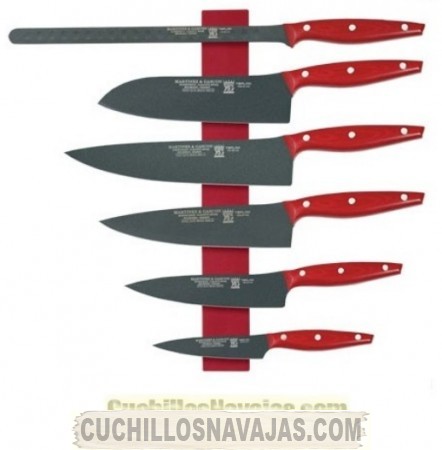
A quality knife not only makes the job easier but also safer. A sharp, well-balanced knife requires less force, reducing the risk of slips and cuts. Furthermore, the precision offered by a good edge allows for better control over ingredients, which translates into more uniform cooking and a more attractive presentation of dishes.
Investing in a good set of kitchen knives is a smart decision for any cooking enthusiast or professional. It’s not about having the most knives, but about having the right types of knives for the most frequent and specific tasks.
Blade Materials: The Soul of the Knife
The choice of blade material is fundamental, as it determines the durability, edge retention, and corrosion resistance of the knife.
Carbon Steel
Carbon steel knives are known for their exceptional ability to maintain an extremely sharp edge. They are favorites of many traditional chefs due to their ease of sharpening and the sharpness they can achieve. However, their main disadvantage is their susceptibility to rust and corrosion if not properly cared for. They require constant maintenance, such as drying them immediately after use and washing, and can develop a patina over time, which for some is part of their charm.
Stainless Steel
Stainless steel is the most common material in modern kitchen knives due to its high corrosion resistance and low maintenance. They are ideal for daily use in environments where humidity is constant. Although they do not retain their edge as well as carbon steel, advances in metallurgy have led to high-quality stainless steel alloys that offer an excellent balance between edge retention and corrosion resistance. They are harder to sharpen than carbon steel, but once sharpened, they are very durable.
Damascus Steel
Damascus steel knives are prized for both their aesthetic beauty and their performance. They are made by layering different types of steel (usually a combination of high and low carbon steels) that are repeatedly forged and folded. This process creates distinctive patterns on the blade and improves strength and edge retention. They are high-end knives, offering a combination of hardness, flexibility, and unmatched aesthetics.
Ceramic
Ceramic knives are made of zirconium oxide, an extremely hard material, surpassed only by diamond. They are incredibly sharp and retain their edge much longer than steel knives, in addition to being completely corrosion-resistant and very easy to clean. They do not transfer metallic ions to food, making them ideal for cutting fruits and vegetables that oxidize easily. Their main disadvantage is their fragility; they are prone to breaking or chipping if dropped or used for tasks that require twisting or impact, such as cutting bones.
Anatomy of a Knife: Knowing its Parts
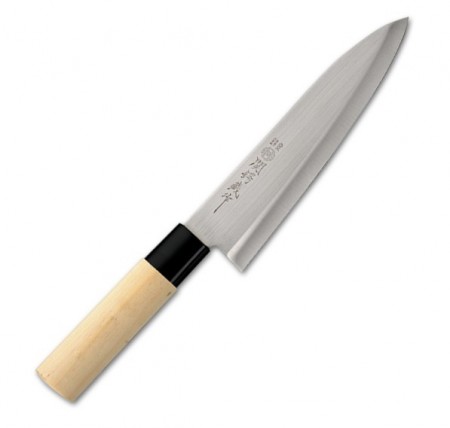
To better understand the types of kitchen knives, it is helpful to know their component parts:
- Blade: The main part of the knife, responsible for cutting.
- Edge: The sharpened edge of the blade.
- Tip: The end of the blade, useful for piercing.
- Spine: The top edge of the blade, opposite the edge.
- Heel: The part of the blade closest to the handle, ideal for cuts requiring more force.
- Tang: The extension of the blade that goes into the handle. It can be full tang, which offers greater balance and durability, or partial tang.
- Handle: The part that is held, made of various materials such as wood, plastic, or synthetic materials.
- Rivets: Pins that secure the handle scales to the tang.
- Bolster: The thickened part between the blade and the handle, which protects the fingers and adds balance.
The Essential Types of Kitchen Knives
Each knife is designed for a specific function, optimizing the cut and facilitating the task. Here are the most common types of kitchen knives and their uses:
Chef’s Knife or Cook’s Knife
Considered the workhorse of the kitchen, the chef’s knife (also known as a cook’s knife) is the most versatile and often the first one acquired. Its blade, which measures approximately 20 to 25 cm, is wide and slightly curved, allowing for a rocking motion ideal for chopping, dicing, and slicing a wide variety of foods, from vegetables to meats. It is the most important knife for general use.
- Characteristics: Wide, curved blade and sharp tip.
- Ideal Uses: Chopping onions, garlic, herbs; cutting large vegetables; slicing meats; crushing ice.
- Advantages: Versatility, efficiency in quick cuts.
- Disadvantages: Can be intimidating for beginners due to its size.

Santoku Knife
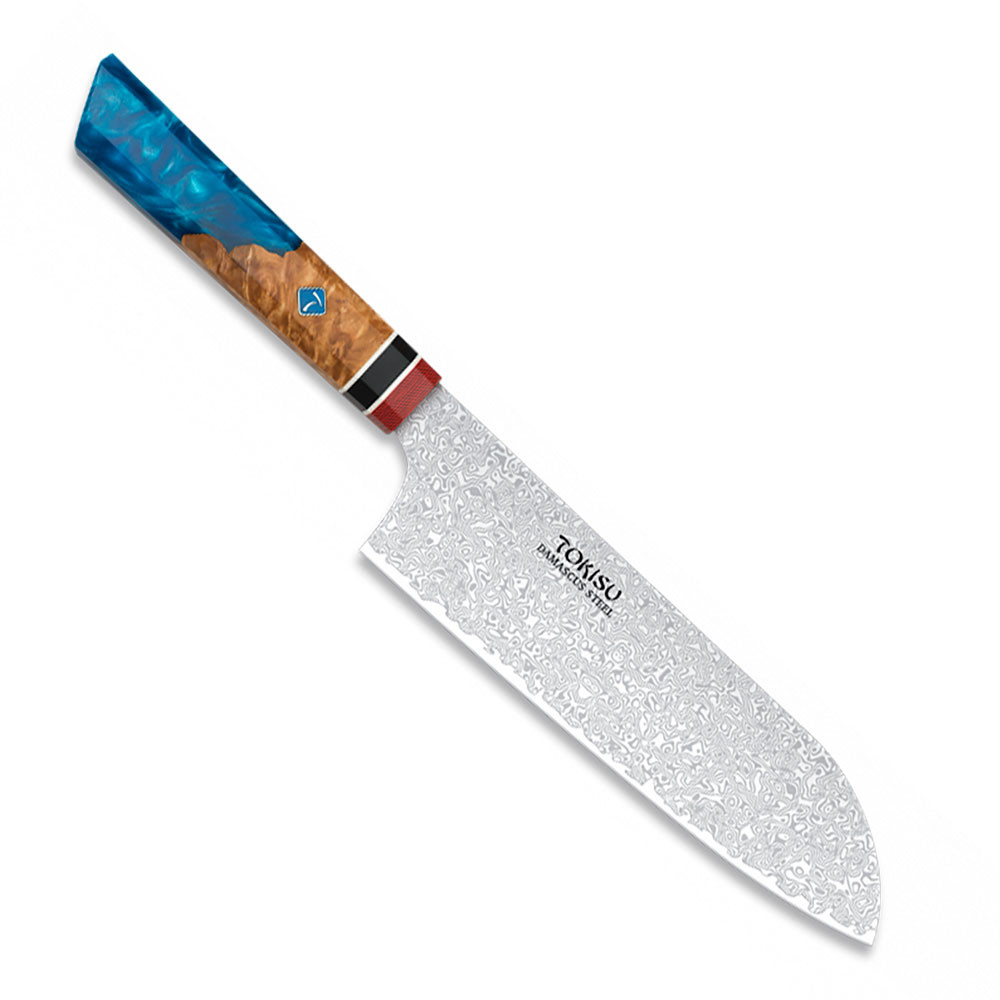
The Santoku knife is the Japanese counterpart to the Western chef’s knife. Its name means “three virtues” or “three uses,” referring to its ability to cut meat, fish, and vegetables. The Santoku’s blade is shorter (generally between 15 and 18 cm), flatter, and has a blunt tip. It often features dimples (hollows) on the blade, which help prevent food from sticking while cutting. It is excellent for more precise cutting and a pushing motion.
- Characteristics: Flatter blade, blunt tip, often with dimples.
- Ideal Uses: Cutting, chopping, and slicing meat, fish, and vegetables with precision.
- Advantages: Lightweight, excellent for fine cuts, dimples prevent food from sticking.
- Disadvantages: Less suitable for the traditional rocking motion.
Bread Knife or Serrated Knife
The serrated knife, or bread knife, is unmistakable for its long, serrated blade, measuring approximately 25 cm. Its teeth allow it to cut through hard, crusty surfaces without crushing the soft interior. It is traditional for cutting bread, but it is also excellent for foods with tough skin and a soft interior, such as tomatoes, peppers, or even cakes.
- Characteristics: Long, thin, and serrated blade.
- Ideal Uses: Cutting bread, tomatoes, peppers, cakes, roasts with crust.
- Advantages: Cuts cleanly without crushing, retains edge longer.
- Disadvantages: Not suitable for fine cuts or chopping.


Paring Knife or Peeling Knife
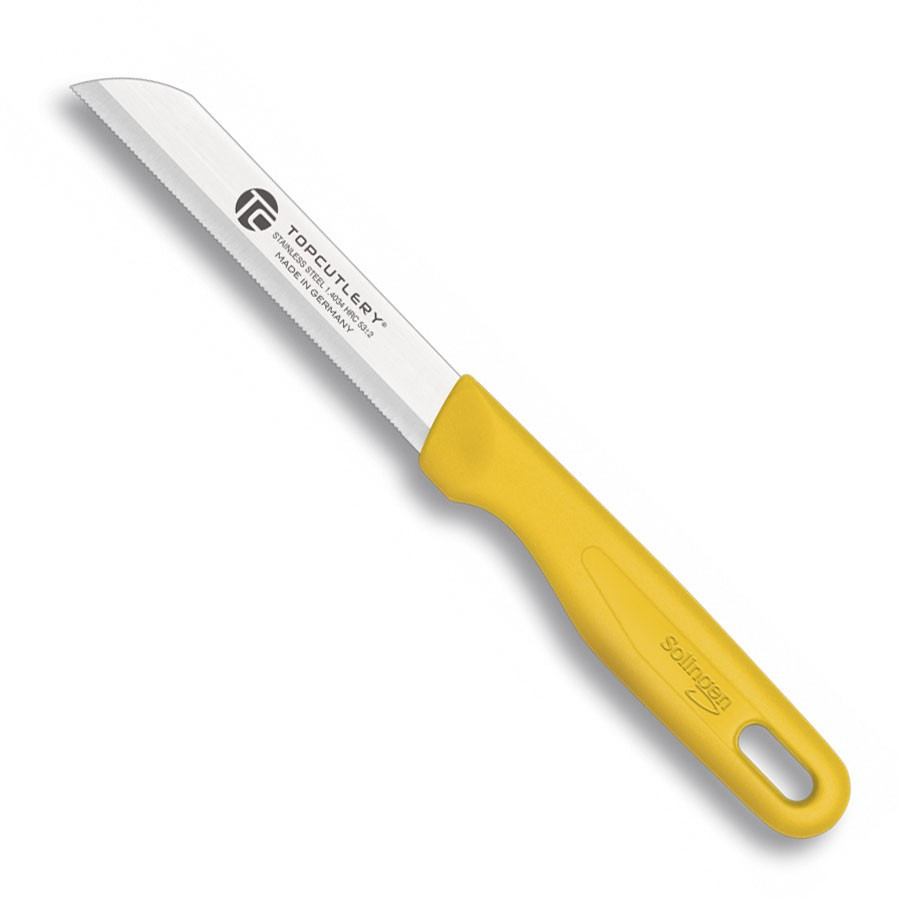
Small but powerful, the paring knife (or peeling knife) is essential for delicate and precision tasks. With a short blade, about 7 cm long, and a sharp tip, it is perfect for peeling fruits and vegetables, removing imperfections, coring, turning, and performing intricate cuts. It is a knife to always have on hand.
- Characteristics: Short, rigid blade and sharp tip.
- Ideal Uses: Peeling, turning, coring, removing seeds, precision work.
- Advantages: Exceptional control, ideal for detailed work.
- Disadvantages: Not suitable for large or hard cuts.
Fillet Knife or Boning Knife
These knives are designed to work with meats and fish. The fillet knife has a long, thin, and flexible blade, ideal for separating meat from bone, filleting fish, or removing skin. The boning knife, with a shorter blade (about 12 cm), rigid and pointed, allows maneuvering around bones and joints with great precision. They are mostly used by butchers and fishmongers.
- Characteristics: Thin and flexible blade (fillet knife) or rigid and pointed (boning knife).
- Ideal Uses: Filleting fish, boning poultry and meats, removing tendons and fat.
- Advantages: Precision in butchering, minimizes waste.
- Disadvantages: Very specific use, requires some skill.


Ham Knife
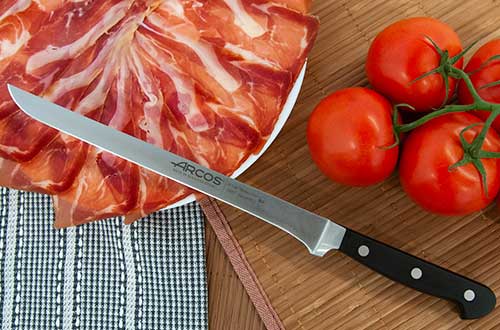
The ham knife is a specialized knife with a very long (over 30 cm), thin, and flexible blade, designed for cutting thin and uniform slices of cured ham. Its flexibility allows it to adapt to the shape of the ham, while its length ensures a clean cut in a single pass. It is indispensable for lovers of good ham.


- Characteristics: Very long, thin, and extremely flexible blade.
- Ideal Uses: Cutting ham and large cured meats.
- Advantages: Allows perfect slices, great control over the cut.
- Disadvantages: Very specific use, not versatile.
Cheese Knife
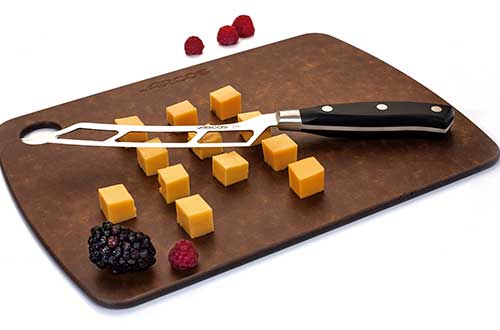
There are various types of cheese knives, each adapted to different textures. Knives for soft cheeses usually have holes in the blade or a forked tip to prevent the cheese from sticking. Knives for hard cheeses are more robust and often have a forked tip for serving portions. There are also knives for spreading creamy cheeses.


- Characteristics: Varied, adapted to cheese texture (holes, forks, robustness).
- Ideal Uses: Cutting and serving different types of cheeses.
- Advantages: Facilitates cutting and presentation of cheese.
- Disadvantages: Very specific.
Tomato Knife
Although a serrated knife is good for tomatoes, there is a specific tomato knife. This knife usually has a short, serrated blade with a forked tip. The small teeth allow it to pierce the tomato skin without crushing it, and the forked tip is useful for picking up slices. It is a precision knife for one of the most delicate vegetables to cut.
- Characteristics: Short, serrated blade and forked tip.
- Ideal Uses: Cutting tomatoes and other fruits/vegetables with thin skin and soft pulp.
- Advantages: Prevents crushing the tomato, clean cuts.
- Disadvantages: Very specific use.
Vegetable Knife (Nakiri / Usuba)
The Japanese Nakiri and Usuba knives are specialized vegetable knives. The Nakiri has a rectangular, flat blade, ideal for straight and precise cutting of vegetables, allowing for quick and uniform chopping. The Usuba is similar but with a single-sided bevel, which makes it even more precise for very fine and decorative cuts, typical of high-end Japanese cuisine.
- Characteristics: Rectangular, flat, and wide blade.
- Ideal Uses: Chopping, slicing, and julienning vegetables, brunoise, etc.
- Advantages: Extremely clean and uniform cuts on vegetables.
- Disadvantages: Not suitable for meats or bones, the Usuba requires technique.


Cleaver or Kitchen Axe
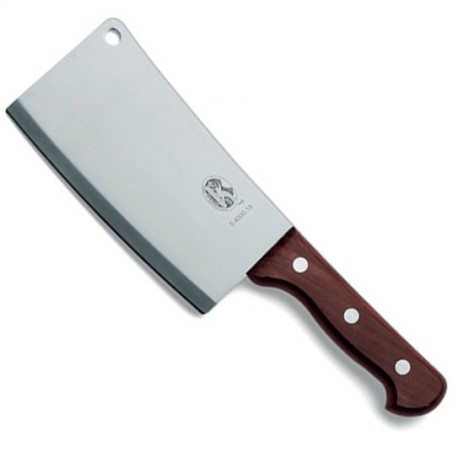
The cleaver or kitchen axe is a robust and heavy knife with a rectangular and thick blade. It is designed to cut through small bones, tendons, and cartilage, as well as to chop large pieces of meat. Its weight and shape make it ideal for heavy-duty tasks, although it can also be used to crush garlic or ginger.


- Characteristics: Rectangular, thick, and heavy blade.
- Ideal Uses: Cutting bones, chopping meat, crushing food.
- Advantages: Great cutting power, durability.
- Disadvantages: Not suitable for delicate cuts, requires space.
Carving Knife or Slicing Knife
The carving knife or slicing knife has a long, thin blade, often with a rounded or slightly pointed tip. It is perfect for cutting uniform slices of roasts, poultry, or large cooked fish. Its length allows for long, continuous cuts, resulting in clean and attractive portions. It is often complemented by a carving fork.


- Characteristics: Long, thin blade, often with a rounded tip.
- Ideal Uses: Slicing roasts, turkey, chicken, cooked ham.
- Advantages: Uniform and clean cuts on large cooked pieces.
- Disadvantages: Specific use, not suitable for chopping or cutting bones.

Salmon Knife
Similar to the fillet knife, the salmon knife is even longer and more flexible, with a very thin and often dimpled blade. It is specifically designed for filleting large salmon loins and other large fish, allowing for extremely thin and effortless cuts, preserving the delicate texture of the fish.
- Characteristics: Very long, extremely thin and flexible blade, often with dimples.
- Ideal Uses: Filleting salmon and large fish.
- Advantages: Impeccable cuts on fish, dimples prevent sticking.
- Disadvantages: Very specialized.

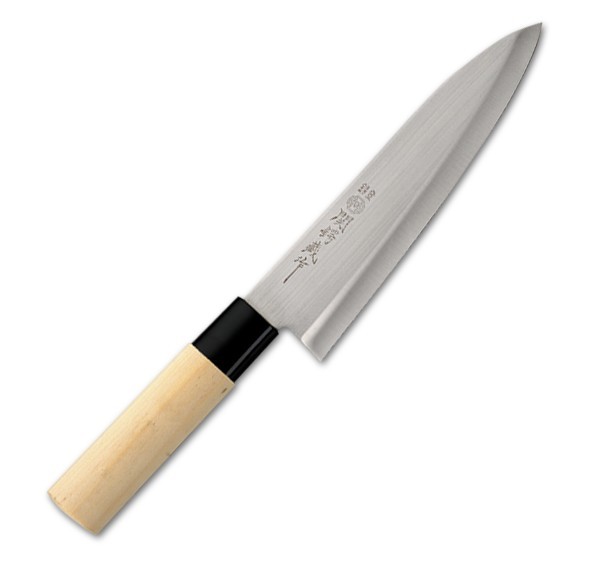
Sushi or Sashimi Knife (Yanagiba)
The Yanagiba is a traditional Japanese knife used for cutting fish for sushi and sashimi. It has a very long, thin, and single-sided sharpened blade (asymmetrical bevel), which allows for a clean and precise cut in a single pass, without damaging the fish fibers. It requires a specific cutting technique and specialized sharpening.
- Characteristics: Very long, thin blade, single-sided bevel.
- Ideal Uses: Preparing sushi and sashimi, filleting fish with extreme precision.
- Advantages: Perfect cuts that preserve the texture of the fish.
- Disadvantages: Requires a lot of skill and particular sharpening, very specific use.
Spreading Knife or Spatula
The spreading knife, or spatula, does not have a cutting edge. Its blade is long and flexible, with a rounded tip, designed for spreading creams, butter, pâtés, or glazes evenly. It is a useful tool for preparing sandwiches and baking.
- Characteristics: Long, flexible blade without an edge, rounded tip.
- Ideal Uses: Spreading, extending, glazing.
- Advantages: Ideal for its function, prevents damaging food.
- Disadvantages: Does not cut.
Oyster Knife or Seafood Knife
A small and robust knife with a short, thick, and pointed blade, designed for opening oysters and other hard-shelled seafood. Its strong tip allows it to enter the hinge of the shell, and its robustness withstands the pressure needed to open it without bending or breaking.
- Characteristics: Short, thick, and very resistant blade, sharp tip.
- Ideal Uses: Opening oysters, clams, and other seafood.
- Advantages: Specialized for a difficult task, safe.
- Disadvantages: Very limited use.
Turning Knife
The turning knife is a type of paring knife with a short, curved blade, similar to a bird’s beak. This unique shape allows for decorative cuts and turning with great precision, especially on fruits and vegetables for garnishes or elaborate presentations.
- Characteristics: Short and curved blade.
- Ideal Uses: Turning vegetables, peeling irregularly shaped fruits, decorative work.
- Advantages: Ideal for artistic and detailed cuts.
- Disadvantages: Requires practice, very specific use.
Choosing the Right Types of Kitchen Knives According to Your Profile
The choice of types of kitchen knives will depend on your experience level, the type of cooking you do, and your available budget.
For the Beginner Cook or Occasional Adventurer
If you are just starting in the kitchen or only cook occasionally, you don’t need a complete arsenal. With a good chef’s knife or a Santoku, a paring knife, and a serrated knife, you will cover most basic tasks. Opt for good quality stainless steel knives, which are durable and easy to maintain.
- Recommendations:
- Chef’s Knife / Santoku: For 80% of your cutting needs.
- Paring Knife: For small and precise tasks.
- Serrated Knife: Essential for bread and crusty foods.
For the Advanced Home Cook or Enthusiast
If you spend a lot of time in the kitchen and enjoy experimenting with different recipes, you’ll want to expand your collection. In addition to the basics, consider adding specialized knives that make more complex tasks easier.
- Additional Recommendations:
- Fillet Knife / Boning Knife: If you work with meat and fish frequently.
- Cleaver: If you usually chop large pieces of meat or poultry.
- Carving Knife: Ideal for Sunday roasts.
- Honing Steel: To maintain the edge of your knives.
For the Professional or Culinary Expert
Chefs and professional cooks need high-performance tools that withstand intensive use. Here, the quality of the material and the balance of the knife are paramount. Consider carbon steel or Damascus knives for their edge retention and feel, and don’t hesitate to invest in very specific knives for each task.
- Advanced Recommendations:
- Complete set of high-end chef’s knives: With different blade lengths.
- Specialized Japanese knives: Such as the Yanagiba for sushi or the Usuba/Nakiri for vegetables.
- Sharpening stones: For optimal edge maintenance.
- Specific knives for each type of food: Ham knife, oyster knife, etc.
Care and Maintenance of Your Knives
Regardless of the types of kitchen knives you own, good maintenance is crucial to prolong their lifespan and ensure their performance.
- Washing: Hand wash knives immediately after use with warm water and mild soap. Avoid the dishwasher, as harsh detergents and heat can damage the edge and handle.
- Drying: Dry knives completely with a soft cloth to prevent oxidation, especially carbon steel ones.
- Storage: Store knives safely to protect the edge and prevent accidents. Use a magnetic strip, a wooden block, blade guards, or a sheath.
- Sharpening: Sharpen your knives regularly. A honing steel is useful for maintaining the edge between deeper sharpenings with a sharpening stone or a quality sharpener. A sharp knife is a safe knife.
- Use of Cutting Boards: Always use wood or plastic cutting boards. Avoid hard surfaces such as glass, stone, or metal, as they will quickly dull your knife’s edge.


Mastering the art of cooking begins with having the right tools. Understanding the different types of kitchen knives and their functions will allow you to tackle any recipe with confidence and efficiency. Whether you are looking for a versatile chef’s knife, a precise Santoku, or a specialized ham knife, the key is to choose those that best suit your culinary style and needs. With the right knowledge and good maintenance, your knives will be your most faithful allies in the kitchen, facilitating every cut and elevating your culinary creations.
If you are ready to equip your kitchen with the best tools or renew your collection, we invite you to explore our wide selection of high-quality kitchen knives, where you will find the perfect instrument for each of your culinary needs. Discover the difference a good knife can make in your daily kitchen life and take your skills to the next level.