When we think of Victorinox, it’s almost impossible not to evoke the image of the iconic Swiss Army Knife, a global symbol of ingenuity and preparedness. But the mastery of this brand, founded by Karl Elsener in 1884, goes far beyond, extending with equal dedication and quality to the culinary field. If you are looking for tools that elevate your kitchen experience, Victorinox knives are, without a doubt, an option to consider.

Victorinox: Much More Than the Swiss Army Knife
Contents
From its beginnings, Victorinox has been committed to offering intelligent and high-quality solutions that help people be better prepared for daily challenges. This philosophy of reliability, precision, and functionality not only applies to its famous compact tools but also to all its product lines, including watches, luggage, fragrances, and, of course, kitchen knives. The company remains a leader in the market, thanks to a firm commitment to exceptional quality, precision, and innovation. Each product is manufactured in Switzerland, ensuring the highest production standards. Victorinox is a family business with a long-term vision that prioritizes not only business success but also a positive contribution to society and the environment.
Manufacturing Secrets: Materials and Craftsmanship
The excellence of Victorinox knives is based on the selection of materials and a meticulous manufacturing process. All their blades, springs, and tools are made of stainless steel. Victorinox uses martensitic stainless steel, ideal for its hardening capacity, essential for creating strong and durable blades. This steel is acquired from European suppliers, some of whom have been collaborating with the brand for almost a century, which guarantees superior and reliable quality.
What many don’t know is that, although Victorinox knives are designed in Switzerland, their blades are forged in Solingen, Germany, a town globally renowned for manufacturing the highest quality forged steel knives. The final finishing is done again in Switzerland. This dual process combines Swiss craftsmanship with German tradition in steel forging. Additionally, Victorinox demonstrates its commitment to sustainability by recycling leftover steel from its production, transforming it into granules that return to its suppliers for reuse.
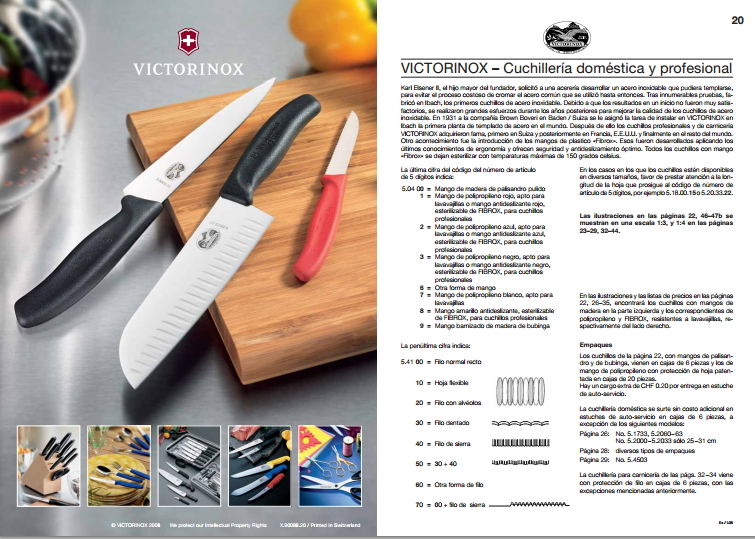
As for the handles, Victorinox also uses high-quality materials. They use modified woods such as maple and walnut for some of their kitchen handles, which, in addition to offering unparalleled warmth to the touch, contain lignins and tannins with antibacterial properties. The wood is sourced from certified European suppliers, reducing the carbon footprint of transportation.
Victorinox Knife Series for Your Kitchen


Victorinox offers a wide range of kitchen knives, from high-precision chef’s knives to everyday table cutlery. Their catalog includes paring knives, bread knives, steak knives, scissors, and accessories such as cutting boards and sharpeners. To meet the diverse needs of users, the brand primarily divides them into two prominent lines: Grand Maître and Swiss Classic.
Grand Maître Series: Forged Excellence
The Grand Maître line represents the professional and high-quality range of Victorinox forged knives. These knives are synonymous with perfect balance and a luxurious and aesthetic design. They are designed to fit comfortably in any hand thanks to their ergonomic handles and are precisely forged in Germany under strict Victorinox standards.
The steel used in this series is chromium-molybdenum-vanadium (X50CrMoV15), which gives them an impressive hardness of 58 HRC (Rockwell Hardness Scale). Their handles are made of black polypropylene, integrated with rivets directly into the steel piece, which guarantees high durability and corrosion resistance. These knives will allow you maximum performance, especially if you already have experience using kitchen knives. Experienced users highlight their excellent quality, comfort, and ability to maintain an impeccable edge with proper maintenance.
Swiss Classic Series: Accessible Quality for Everyone
On the other hand, the Swiss Classic series aims to bring Victorinox’s exceptional quality to a wider audience at a more accessible price. These knives are known for their lightness and ease of use, making them an ideal option for those new to cooking or with little experience with chef’s knives.
The blade of the Swiss Classic is made of stamped carbon steel, and its construction incorporates a “secret formula” that gives it the performance of a great chef’s knife. They have a hardness of 56 HRC. One of its most outstanding features is the material of its handle, known as Fibrox, which is extraordinarily comfortable, ergonomic, and also antibacterial and non-slip. Thanks to its light weight and perfect balance, it allows for prolonged work sessions without fatigue, minimizing wrist tension. Its blade is thinner and slightly more flexible compared to forged knives.
Which to choose? A Personal Decision
The main difference between these two series lies in their finish and conception: the Grand Maître is the professional forged range, heavier and designed for experienced users seeking maximum control. The Swiss Classic, lighter and stamped, is an excellent option to start with a high-quality product in your kitchen without a large initial investment. The choice will depend on your experience level, the use you will give it, and your personal preferences.
Victorinox Professional Knives for Cooks and Butchers
Whether you are a cook or a butcher, in these two professional categories, the knife is the most important working tool. Victorinox professional knives are characterized by their resistant, high-quality materials that adapt to the hand and adjust precisely to each application. Thanks to the wide range, every professional finds the knife that best suits their needs. The correct blade hardness and laser-controlled cutting angle guarantee high cutting efficiency.
Slicing Knives
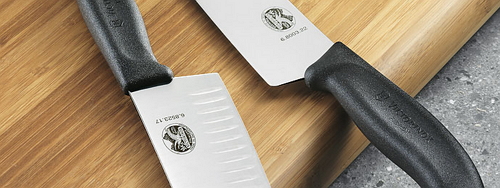
Whoever opts for the highest quality raw materials should not take risks with a cutting tool. Victorinox salmon knives are very flexible and, on demand, have a fluted edge, which prevents food from sticking to the blade.
Butcher Knives
Victorinox butcher knives have exceptionally firm blades with different shapes available for various applications. FIBROX handles can be sterilized at 150° C.
Chef Knives
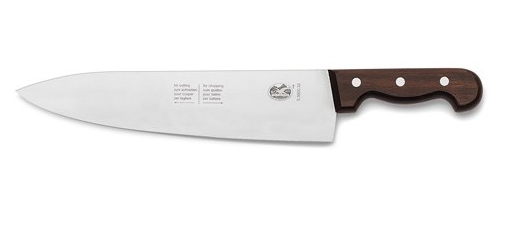
For decades, great chefs and professionals have relied on excellent Victorinox knives. These knives are characterized by their resistant, high-quality materials that adapt to the hand and adjust precisely to each application.

Boning Knives
Boning knives have relatively short but very firm blades that allow meat to be removed from the bone cleanly and effortlessly. The knives have blades of different shapes and lengths.

Chef Knife Cases
The Victorinox chef’s case is available in different sizes. Thanks to their high cutting efficiency and ergonomic handles made of plastic or rosewood, the knives are for years the ideal complement in the catering sector, both for the apprentice and for the master chef.

Care and Maintenance: Keys to a Long Life
To ensure your Victorinox knives accompany you for many years, it is essential to give them proper care.
- Cleaning: Ideally, wash your knives by hand immediately after each use. Simply place them under warm running water and rub the blade with your fingers (avoiding the edge) or with a clean sponge. Salty or acidic foods can stain the blade if not cleaned in time. For greasy foods, you can use a small amount of liquid detergent. While some household knives with synthetic handles are dishwasher safe, it is recommended to hand wash large knives, as the dishwasher can damage the cutlery basket, cause corrosion, or wear down the edge more quickly. If you use a dishwasher, rinse first, make sure the knives do not touch other metals, and avoid aggressive detergents. Briefly opening the dishwasher after the cycle helps prevent steam stains.
- Wood Handle Care: Knives with wooden handles should never be put in the dishwasher. Clean the handle with a damp cloth and avoid excessive wetting, as well as extreme temperatures and aggressive cleaning agents. It is recommended to occasionally treat the handle with a conventional cooking oil (such as canola or cold-pressed linseed) or protective wax to prevent moisture entry and enhance its color.
- Drying: Never let your knives air dry, as this can leave limescale deposits. Dry them immediately after washing with a clean cotton or linen towel.
- Cutting Boards: Avoid hard surface cutting boards such as natural or artificial stone, as they dull the blade. Use wooden or plastic cutting boards to protect your knife’s edge. When moving cut food from the board to the pot, use the spine of the knife instead of the edge to avoid dulling it.
- Storage: The golden rule is never to store knives loosely in a drawer, as they can damage each other and lose their edge. It is highly recommended to store them in a knife block, an in-drawer block, or a magnetic strip on the wall.
- Warranty: Victorinox offers a lifetime warranty for its knives, blades, and sharpening tools against material or manufacturing defects under normal use. Other products have a two-year warranty.
A Commitment to the Future: Victorinox Sustainability
Victorinox not only focuses on the quality of its products but also on its environmental impact. Sustainability is a fundamental pillar of its long-term vision. The brand integrates responsible practices throughout its production process: for example, the famous Swiss Army Knife is made with up to 85% recycled steel, and the company is working to gradually apply recycled materials to other product categories. Their cardboard packaging uses up to 90% recycled paper.
In addition to material selection, the inherent durability of Victorinox products is a manifestation of its sustainable commitment; by offering lifetime warranties and repair options, they seek to extend the lifespan of their items and reduce waste. In their production centers in Switzerland, they optimize energy use, employ renewable energy systems, and use innovative processes for steel recycling. The installation of solar panels in their factories offsets approximately 500 tons of CO2 per year, which underscores their dedication to a greener future.