Pruning is one of those fundamental tasks in the care of our trees and plants. Not only does it beautify the garden, but it is key to the health and vigor of the flora. While shears and saws are well-known tools, there is an often-underestimated gem that offers unparalleled precision: the pruning knife. Let’s explore why this compact tool will become a must-have for any gardening enthusiast.
Pruning: Fundamentals and Types for a Healthy Garden
Contents
To prune means to cut or remove superfluous branches from trees, vines, and other plants so that they bear fruit with more vigor. The best time to prune is in late winter and early spring to avoid intense cold and to reduce the loss of sap and resin that occurs from cutting the branches of plants and trees.
It is very important to prune plants and trees so that they grow healthy and thus flower and bear more fruit. It is necessary to have prior knowledge of the plant or tree before cutting them and to know how to identify and differentiate the flower bud from the leaf bud before cutting.
Well-done pruning favors the proper distribution of sunlight on the branches and the interior of the plant or tree; damaged or diseased parts and dry branches should be removed. Before removing a plant, make sure it is dead.
There are different types of pruning, each with a specific objective:
- Formation pruning: This is done at the beginning of the plant’s growth to give it the desired shape, structuring its skeleton.
- Maintenance pruning: This is carried out when the tree or plant is well-formed to remove dry, diseased, or obstructive branches, ensuring overall health.
- Exceptional pruning: For extreme cases where the plant requires drastic intervention due to pests, diseases, or severe damage.

Pruning Knives vs. Other Tools: The Expert’s Choice
For a job well done, it is essential to have well-sharpened and clean tools. While pruning shears and saws are indispensable tools, the pruning knife is the perfect companion for tasks that demand a superior level of precision.
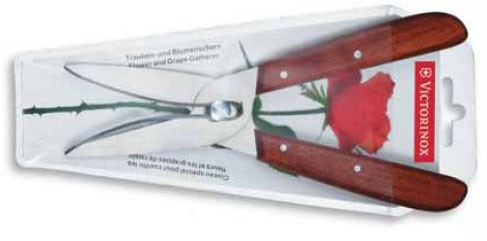
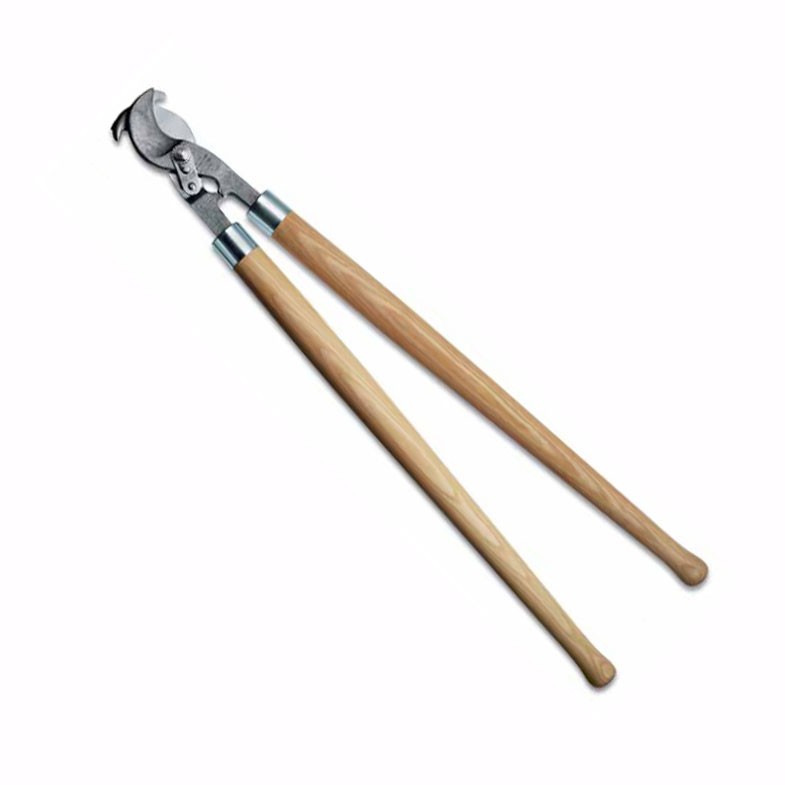
Unlike shears, which are designed for thicker branches and make a “shearing” cut, the knife offers a delicacy and accuracy that makes all the difference in fine cuts. Its main purpose is to make cuts so clean that they promote better healing and healthy plant growth, minimizing the risk of damage or infections. Shears are excellent for cutting medium-sized branches, while the saw is for thicker ones. However, when it comes to details, the knife is unsurpassed.
Specific Uses of the Pruning Knife: Where Precision is Key
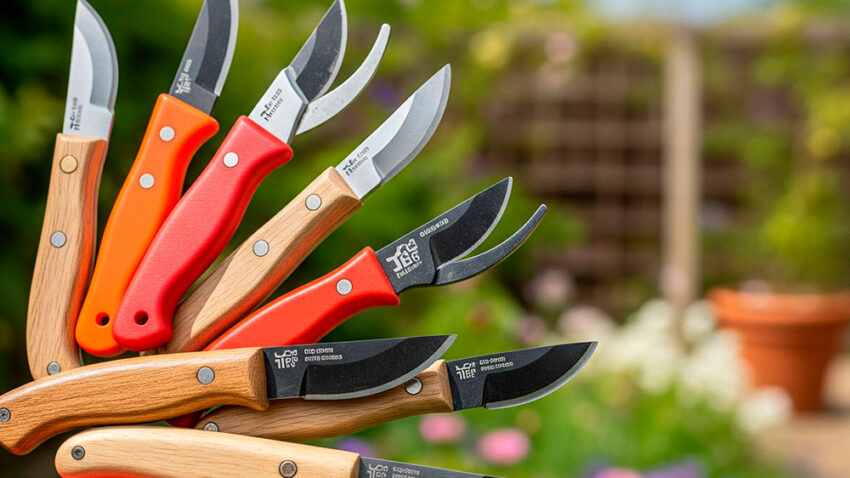
The versatility of the pruning knife makes it a valuable tool for various tasks, especially those where other pruning tools would fail due to their size or design. Its sharp, often curved blade design allows for work that requires an almost surgical touch.
- Delicate and Precision Cuts: It is ideal for removing withered flowers, unwanted shoots (suckers), or thin twigs, even in confined spaces where other tools would not reach. Its curved blade design allows it to “hug” the part to be cut, facilitating a clean cut without damaging the main plant.
- Grafting: One of its most outstanding applications is in bud grafting, a technique used to propagate roses and other trees. There are specialized knives, such as grafting knives, which have a sharpness similar to that of a razor and often include a spatula on the back to lift the bark and facilitate the insertion of the graft.
- Sanitation and Bark Cleaning: The pruning knife is useful for cleaning the bark of thicker stems that have already been pruned, removing damaged or dead parts and promoting the overall health of the plant. It can also be used to control excessive growth in species such as vines.
- Pruning Young Trees and Delicate Species: Some knives are specifically designed for pruning very delicate trees, such as peach trees, or for thinning shrubs in nurseries.
- Grape Harvesting and Collection: The curved blades of knives, often general-purpose, can be very practical for cutting plant stems or grape clusters, facilitating collection.
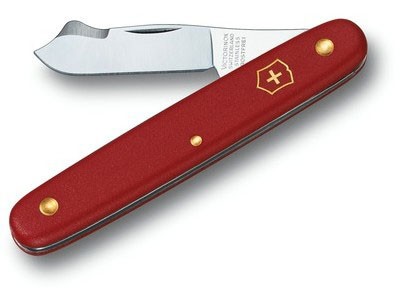
Keys to Choosing the Perfect Pruning Knife
Choosing the right knife is fundamental to optimizing your work and ensuring the care of your plants. Consider the following points to find the tool that best suits your needs and your type of gardening, from the professional landscaper to the amateur who cares for their small urban garden.
Blade Type and Material
While the curved blade is characteristic of pruning knives and very efficient for precise cuts, the material is what determines its quality. Make sure it is made of high-quality steel to ensure good edge retention and corrosion resistance. Good stainless steel is ideal for preventing rust, especially if you work in humid environments. For grafting, look for carbon steel blades, which, although they require more maintenance to prevent oxidation, offer a superior edge.
Handle and Ergonomics
The handle of your knife should be a comfortable extension of your hand. Look for one that is non-slip, with an ergonomic shape that fits the size of your hand. A good design reduces fatigue, especially during long working days, and improves cutting precision, preventing accidents. Wood, polypropylene, or resin handles are popular options for their durability and secure grip.
Weight and Balance
A well-balanced knife will allow you to work more comfortably and for longer without getting tired. The weight should not be excessive or too light; the ideal is a tool that feels solid in the hand but allows for precise and effortless control.
Durability and Replacements
Opting for a good quality knife pays off with its lifespan. Some manufacturers offer blade replacements, which significantly extends the life of the tool, making the initial investment worthwhile in the long run. It is always better to buy a robust, reputable brand tool than a low-cost model that could fail quickly.
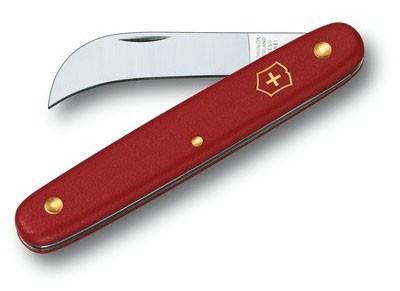
Tips for Efficient and Safe Use
Handling a pruning knife requires attention and knowledge to protect both the plant and yourself. It is a powerful tool, and respect for its edge is key to preventing accidents.
Clean Cuts and Orientation
The goal is always a smooth, clean cut. If your knife has a single bevel (like some grafting knives), make sure to sharpen only one side to avoid damaging it. Ideally, always direct the cut away from your body to prevent accidents. Make the cut with a single fluid and secure motion, not with sawing movements.
No Excessive Force
The knife is for precision. If the branch is too thick or resistant, do not force it. It is better to use a more appropriate tool for that thickness, such as two-handed pruning shears or a pruning saw. Forcing the tool is not only dangerous but can also damage the plant with an irregular cut.
Posture and Protective Equipment
Maintain a stable posture, with your feet firmly on the ground and hold the tool firmly. It is always advisable to wear resistant gloves and safety glasses when pruning to protect yourself from scratches, cuts, and dirt. Gloves with a good grip not only protect you but also improve control over the knife.
Essential Maintenance to Prolong the Life of Your Knife
Proper maintenance of your pruning tools is as important as their proper use. This ensures precise cuts and extends their lifespan, also protecting the health of your plants. A well-maintained tool is an investment that lasts for years.
Regular Cleaning
After each use, it is crucial to clean the knife to remove sap and other plant debris. This prevents the transmission of diseases between your plants. You can use a damp cloth and then dry it thoroughly. For sticky sap and resins, there are specific cleaners that make the task easier. Never store a dirty knife.
Constant Sharpening
A sharp knife reduces effort and ensures clean cuts. Sharpen your knife at least once a year, or whenever you notice that the cut is not fluid or requires more effort. You can use a metal file, a specific sharpening stone, or a tungsten carbide sharpener. Remember to maintain the original blade angle when sharpening, as it is crucial for its performance.
Lubrication and Storage
After cleaning and sharpening, apply a few drops of lubricating oil to the blade and the folding mechanism if it has one. This protects the metal parts from oxidation and ensures smooth operation. Store your knife in a dry and safe place. If it comes with a sheath, use it to protect the blade. There are also leather or nylon sheaths that can be hung from the belt, very practical for always having it at hand in the garden.


With the right pruning knife and constant maintenance, you will have a reliable tool that will help you keep your garden in optimal condition, promoting the health and vibrant development of your plants. If you are looking for gardening tools or specific items, you can find a wide variety of gardening and outdoor knives, as well as mushroom knives in our store. We invite you to discover the perfect tool for every need and take your passion for gardening to the next level.