
Montería hunting is one of the most deeply rooted traditional big game hunting practices in the Iberian Peninsula. Did you know that its documented origin dates back to the Late Middle Ages, when courts and nobility commissioned Hunting Treatises to systematize techniques and practices? Today, montería continues to evolve: it combines tradition, precise shooting, dog handling, and respect for the forest.
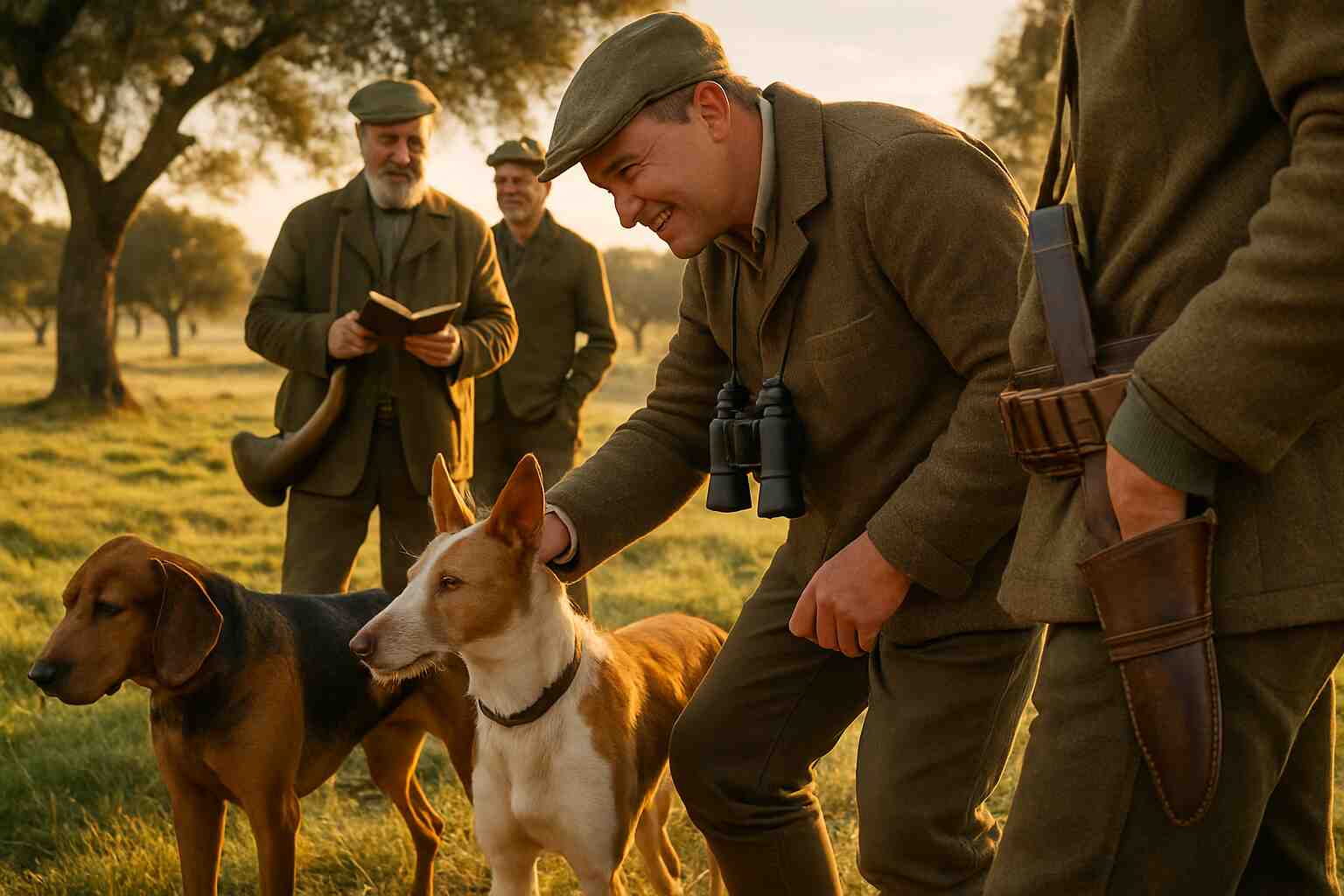
In this article, you will find a practical and updated explanation of montería modalities, the functions of dogs, key equipment (axes, knives, folding knives), and good practices every hunter should know. We also include comparisons and recommendations for choosing the right material and where to acquire it: CuchillosNavajas.com
Origin and History of Montería in the Iberian Peninsula
Contents
- Origin and History of Montería in the Iberian Peninsula
- Types of Montería: Northern and Spanish
- The Role of Dogs in Montería
- Regulations, Ethics, and Good Practices
- Various hunting and survival axes that can help you in the wild
- Safety and Behavior at the Stand
- Practical Comparison: How to Choose According to Your Region and Style
- Recommendations for Conservation and Post-Handling
Montería as we know it today has deep historical roots. In the Late Middle Ages, hunting was both a food necessity and a symbol of status for the nobility. Hunting treatises codified rules, types of hunting, and the use of dogs that still survive in current traditions.
Over time, two major styles consolidated in the Iberian Peninsula: northern montería and Spanish montería. Each style adapts methods, collars, and dog types to the orography, climate, and predominant species in the area.
Types of Montería: Northern and Spanish
Although both modalities share the essence of big game hunting with dogs, their approaches are different and respond to distinct priorities: selectivity, technique, and tradition.
Northern Montería
Northern montería, which prevails in the far north (northern half of Galicia, Asturias, and Cantabria), incorporates the well-known wild boar hunting with a leash. This is a very selective technique: the dog works controlled by the guide to locate and hold the wild boar, avoiding disturbing females with offspring and minimizing disturbance to other species.
The priority is the selection of the specimen and the conservation of the local ecosystem. The dogs used in this modality are trained to exclusively pursue wild boars and not to be distracted by other prey.
Spanish Montería
Spanish montería is the most widespread modality in central and southern Spain and Portugal. It tends to be less restrictive in terms of selectivity: wild boars and deer are mainly hunted, but also fallow deer and mouflon.
Here the value lies in the stand work, observation, and aiming at a moving target. Dogs in Spanish montería are not always exclusive to a single type of prey and act in packs that search, corner, and raise animals during the day.
| Aspect | Northern Montería | Spanish Montería |
|---|---|---|
| Typical areas | Northern half of Galicia, Asturias, Cantabria | Central and southern Spain, Portugal |
| Main species | Wild boar (with leash) | Wild boar, deer, fallow deer, mouflon |
| Selectivity level | Very high | Moderate |
| Type of dogs | Dogs trained for wild boar | Versatile packs |
| Hunting technique | Leash and controlled restraint | Mobilization and harassment at stands |
The Role of Dogs in Montería
Dogs are the soul of montería. Their selection, training, and handling define the effectiveness of the day. There are differences between dogs for leashing and packs: each has specific capabilities that should be known.
Leash Dogs
Designed to locate, hold, and allow the guide to control the animal. They are dogs with a great sense of smell, strong gripping instinct, and obedience so as not to scatter. In northern montería, they are essential.
Pack Dogs
They form packs that search for and raise animals so that the stands can take them down. They need stamina, sociability in the pack, and tolerance to the stress of roe deer or wild boar when they run.
- Training: consistency and preparation in real scenarios.
- Health: vaccination, deworming, and veterinary check-ups before the season.
- Equipment for dogs: resistant collars, GPS for packs, and protection in bushy areas.
A well-trained dog improves selectivity and reduces risks for both humans and other species in the forest.
Regulations, Ethics, and Good Practices
Apart from technical knowledge, montería requires ethical behavior and compliance with local regulations. Respecting quotas, open seasons, and safety rules is basic. It is also the responsibility of the organizer and participants to minimize animal suffering and care for the biodiversity of the hunting ground.
Some practical recommendations:
- Plan the day and access routes to avoid disturbing private properties.
- Identify and respect females with offspring and protected specimens.
- Maintain clear communication between stands and packs using radios and safety protocols.
- Have a first aid kit, first aid equipment, and basic knowledge of how to act in case of accidents.
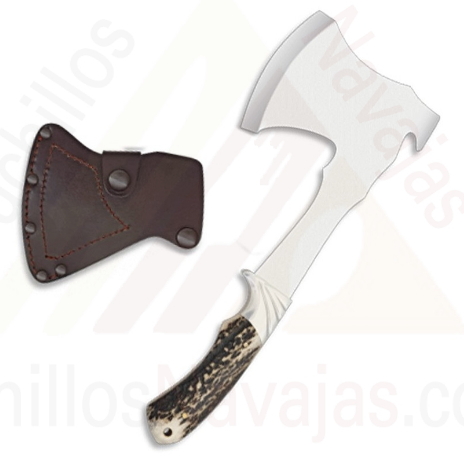
Various hunting and survival axes that can help you in the wild
The choice of equipment not only improves efficiency in the wild but also increases safety. Below you will find guides and a comparative table of common tools: axes, knives, and folding knives, as well as recommendations for clothing and accessories.
| Product | Main use | What to look for |
|---|---|---|
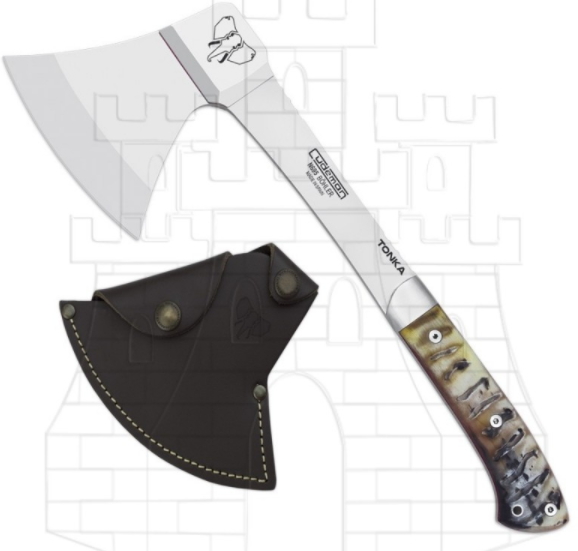
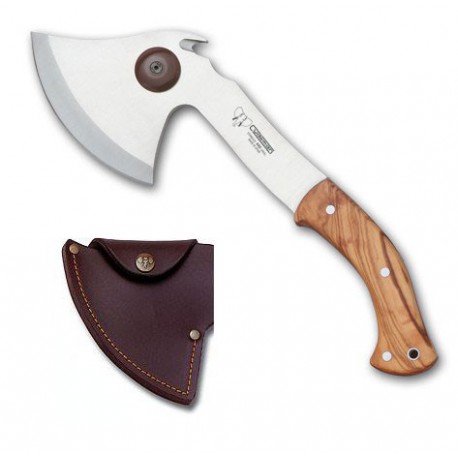
| Montería axe | Clearing brush, meat handling, and stand work | Resistant handle, balanced head, secure sheath |
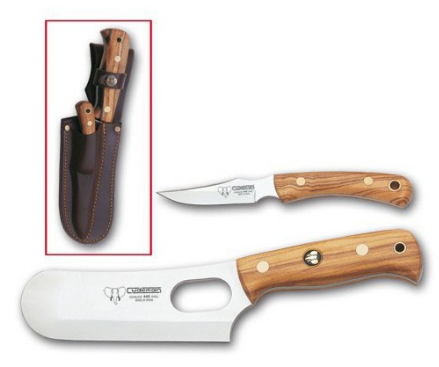
| Hunting knife | Butchering and field dressing | Stainless steel or carbon blade, firm sheath, manageable size |
| Hunting folding knife | Light tasks and multi-purpose tools | Secure lock, good ergonomics, easy sharpening |
| Technical clothing | Protection against weather and terrain | Waterproof, breathable, camouflage, and reinforcements in high-wear areas |
Selection of Axes and Knives
The choice between an axe and a knife depends on the day’s work. A robust axe is useful for cutting firewood, opening enclosures, or assisting in the handling of large pieces. Hunting knives should be easy to handle for butchering and cleaning.
At CuchillosNavajas.com, you will find a wide range designed for montería: from axes with antler or olive wood handles to specific knives and folding knives for butchering.
Safety and Behavior at the Stand
Safety is a priority. Always maintain a responsible attitude at the stand: know the direction of fire, avoid unnecessary movements, and stay calm when an animal runs. Use vests and signals if local regulations require it.
- Verify that your weapon is unloaded when moving around the area.
- Keep radios or cell phones with sufficient battery.
- Know the location of access points and plan safe exits in case of emergencies.
Skill in handling dogs and respect among hunters determine the quality of the day and reduce incidents.
Practical Comparison: How to Choose According to Your Region and Style
The choice of montería type and equipment depends on the region, orography, and type of animals. Here is a quick guide to decide what to prioritize based on your context.
- If you hunt in the north: prioritize leash dogs and control tools. Look for equipment that allows for more selective and environmentally friendly hunting.
- If you hunt in the center or south: prepare packs and equipment for long days. Improve your aim at moving targets and equip your dogs for stamina.
- If you participate in mixed monterías: combine versatile equipment (multi-purpose folding knives, lightweight axes, and butchering knives).
Recommendations for Conservation and Post-Handling
After the day, the handling of the game, its transport, and butchering directly influence the quality of the meat and the traceability of the hunting use. Some key points:
- Hygiene: work with clean tools and clean surfaces.
- Transport: use appropriate covers and containers to maintain the cold chain.
- Labeling: in case of sale or exchange, keep documentation and permits.
The investment in quality tools (axes, knives, and folding knives) is noticeable in the efficiency and presentation of the final product.
Where to buy: for all the equipment we have mentioned, our recommended online store is CuchillosNavajas.com, where you will find specific items for montería and big game hunting.
SEE MORE AXES | SEE HUNTING KNIVES | SEE HUNTING FOLDING KNIVES
Montería combines discipline, tradition, and technique. Mastering the differences between styles, caring for dogs, and choosing the right equipment allows for more productive and environmentally respectful days. Practicing safely and responsibly ensures that this tradition remains alive and sustainable for future generations.
Start by checking your equipment, prioritize dog training, and always respect the rules of the hunting ground. If you are looking for material, remember that in our online store you will find varied and specialized options for montería.