Step into the Magical World of Mushrooms — Safely!
With the arrival of autumn, our forests dress up and invite us to one of the season’s most exciting activities: mushroom foraging. “Mycotourism” is booming, connecting us with nature in a unique way and offering culinary treasures. However, this rewarding hobby is not without dangers. For every edible, delicious mushroom there are one or more very similar species that are toxic — even deadly!.

The key to enjoying mushrooms safely is knowledge and caution. In this article we will break down everything you need to know to become a mindful, responsible forager — from how to identify them correctly to the best ways to prepare and store them. Keep reading and get ready for your next mycological adventure!
I. The Fascinating World of Mycotourism and the Perfect Basket
Contents
- I. The Fascinating World of Mycotourism and the Perfect Basket
- II. Identification: The Key to Safe Foraging
- III. Responsible Foraging: Protecting Our Forests
- IV. Preservation and Consumption: From the Forest to Your Plate
- V. What to do if you suspect poisoning?
- Enjoy mushrooms with knowledge and respect!
Why is mushroom hunting the perfect plan for this autumn?
Mycotourism goes beyond a simple walk in the woods. It is a sensory experience that invites us to slow down the pace of routine, to walk slowly, feeling the damp earth and the crunch of leaves under our boots. It connects us with the ancestral tradition of gathering food from the land and teaches patience, observation and a deep respect for natural processes. It’s a perfect plan to disconnect and immerse yourself in the calm of autumnal forests.
The importance of a proper basket
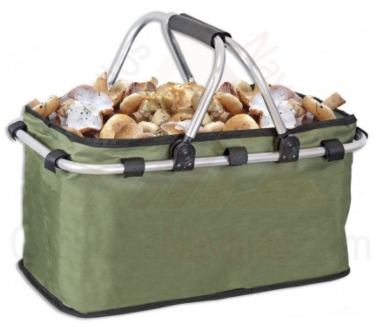
The container you use for collecting is crucial. wicker baskets are the ideal choice. Their woven structure allows mushrooms to breathe, preventing damage from excessive moisture and helping spores disperse into the environment. This contributes to the regeneration of the mycelium, the underground part of the fungus essential for reproduction. Forget plastic bags — they damage mushrooms and the ecosystem!.
Essential equipment for the forager
For a comfortable and safe day in the hills, we recommend:
- Wicker baskets: As mentioned, they are the best option for carrying your finds. Do not use plastic bags for collecting. Besides being prohibited in some regions, they are unhygienic because lack of ventilation promotes bacterial growth and mushrooms decompose faster. Use wicker baskets that keep them aerated.
- Specialized knife: Essential for cutting mushrooms at the stem, right at the base, without damaging the mycelium. Some include small brushes for an initial cleaning.

- Appropriate clothing and footwear: Choose comfortable, breathable clothing and waterproof boots to protect against moisture and slippery terrain. A hat or cap and gloves are also recommended.
- Field guide or mobile app: To help with identification, but use with caution.
- Compass or GPS: To avoid getting lost, especially if you are not familiar with the area.
II. Identification: The Key to Safe Foraging
The Golden Rule: Only pick what you know for certain
This is the non-negotiable maxim in the world of mycology: never eat a mushroom you have not identified with one hundred percent certainty. A mistake can have serious consequences, from an upset stomach to death. Do not trust the advice of self-proclaimed “experts” without a solid basis.
Mushroom morphology: know its parts
For correct identification it is fundamental to know the parts of a mushroom:
- Cap: The upper part, which can take many shapes (globose, conical, flat, convex, bell-shaped, etc.).
- Cuticle or skin: Covers the cap; it can be smooth, rough, scaly, dry or sticky.
- Hymenium: The underside of the cap where spores are produced. It can have gills, tubes, folds or spines. The color of the gills and spores is a vital clue.
- Stem: Supports the cap; it can be cylindrical, straight, curved or thickened at the base.
- Ring: Remnant of the partial veil that covers the hymenium in early stages.
- Volva: A sac-like structure that surrounds the base of the stem in some species. Observing it is crucial because many deadly mushrooms have one!.
- Mycelium: The vegetative underground part of the fungus — the “true” organism.
Debunking popular myths about poisonous mushrooms
There are no simple, reliable rules to distinguish edible mushrooms from poisonous ones. All of these beliefs are FALSE!:
- “If snails or animals have nibbled them, they are edible.” False. Amanita phalloides, lethal to humans, is often perforated by larvae.
- “If they blacken silver or garlic when cooked, they are toxic.” False. Amanita phalloides does not blacken silver, and some edible mushrooms do.
- “If they smell and taste good, they are safe.” False. Amanita phalloides has been described as delicious by some victims. Entoloma sinuatum has a mealy smell and pleasant taste but is toxic.
- “If they change color when cut, they are poisonous.” False. Many edible mushrooms such as some champignons and milk caps change color.
- “If they are cooked long enough they lose their toxicity.” False. Some toxins are heat-stable and are not destroyed by cooking.
- “Mushrooms with a ring and/or volva are toxic.” False. Amanita caesarea, an excellent edible, has both.
Most toxic mushrooms in Spain you MUST know
Spain hosts a great diversity of mushrooms and, unfortunately, some of the most dangerous species grow in our forests. Knowing them is vital for your safety:
- Amanita phalloides (the “Death Cap”):
- Responsible for 90% of fatal mushroom poisonings worldwide.
- A tiny piece can be fatal.
- Causes severe liver failure and cellular necrosis in the liver, often requiring urgent transplantation.
- Characteristics: Cap ranges from white to yellow-green, stem with ring and white gills, bulbous base with volva. Garlic odor in some cases. Does not change color when cut. Easily confused with young cultivated mushrooms or the edible Amanita caesarea.
- Cortinarius orellanus (the delayed danger):
- Contains orellanine, a toxin that causes kidney failure.
- Dangerous because of delayed effects: symptoms can appear 3–14 days after ingestion.
- Characteristics: Color ranges from reddish-brown to brick red. Grows in conifer forests. Often confused with edible species. Lacks ring and volva.
- Amanita muscaria (the “Fly Agaric”):
- Famous for its red cap with white spots.
- Highly toxic and psychoactive; can cause hallucinations, convulsions, and even death.
- Characteristics: Bright red cap with white flakes, white gills and stem, bulbous base with concentric rings.
- Gyromitra esculenta (the “False Morel”):
- Its distinctive shape resembles a brain, with brown folds.
- Contains hydrazine (gyromitrin), which causes vomiting, diarrhea and liver damage.
- Mortally poisonous raw, but sometimes considered edible if properly prepared by heat that reduces the toxin and discarding the cooking water.
- Entoloma sinuatum (the Deceiver):
- Often easily mistaken for other edible species.
- Causes severe gastrointestinal poisoning.
- Characteristics: Mealy odor and very pleasant taste.
Other poisonous mushrooms to watch for:
- Amanita virosa / Amanita verna (the destroying angel): Toxic and deadly, wholly white and confusable with young cultivated mushrooms.
- Boletus satanas: Less aggressively poisonous than its name suggests, but causes intestinal pain, fever and vomiting.
- Galerina autumnalis (Galerina): Deadly; grows on wood and is mistaken for edible species that grow on stumps.
- Hypholoma fasciculare (Sulphur Tuft): Very toxic, can be fatal.
- Omphalotus olearius (Jack-o’-lantern mushroom): Very toxic, causes digestive upset. Often confused with edible Cantharellus.
- Agaricus xanthodermus (yellow-staining mushroom): Mildly toxic, causes minor gastric upset; can be mistaken for cultivated mushrooms.
- Lepiota cristata (Lepiota): Highly toxic. All poisonous Lepiotas are small in size.
How to tell edible from poisonous mushrooms: key features
Accurate identification is the only safe method. There is no single characteristic — you must look at a set of features:
- Habitat: Where the mushroom grows (type of forest, soil, on wood).
- Shape and size: Of the cap, stem, etc.
- Color and texture: Of all its parts.
- Odor: Some poisonous mushrooms have unpleasant smells, but this is not a rule.
- Gills, tubes, pores or spines: Their color, arrangement and reaction to cutting are important. White gills can indicate toxicity.
- Presence of ring or volva: Their absence or presence is not a single decisive criterion.
- Spores color: Can indicate toxicity (pinkish or very dark).
Expert help and training

If you have the slightest doubt, consult a mycology expert or a mycological association. Some associations offer free identification services. Mycology courses, such as the “Mycological Interpreter Course,” provide comprehensive training on identification, ecology and regulations. Remember — mobile apps are not 100% reliable for identification!.
III. Responsible Foraging: Protecting Our Forests
When and where to look for mushrooms
The ideal season for mushroom foraging is autumn, generally from late September to December, with November the standout month, especially for porcini. The first rains and mild temperatures are crucial for their growth. Some special mushrooms can also be found in spring (morel, horn of plenty, etc.) and, if there are rains, even in summer (chanterelle, porcini, parasol, summer truffle).
Wooded areas such as pine forests, holm oak groves, oakwoods, chestnut forests and beech woods are the best habitats. Top destinations in Spain include Rascafría (Madrid), Vinuesa (Soria), Sierra de Albarracín (Teruel), El Hayedo de Montejo (Madrid), Montseny (Barcelona) and Sierra de Gredos (Ávila).
Sustainable harvesting techniques
To ensure mushrooms continue to thrive in our forests, it is vital to harvest responsibly:
- Cut, don’t pull: Use a knife to cut the mushroom at the base of the stem, without digging into the soil. This protects the mycelium and allows the mushroom to regrow.
- Place the underside of the cap facing down so you don’t soil other specimens with earth.
- Respect the environment: Do not use rakes or similar tools that disturb the soil as you damage the landscape and may be prohibited. Do not destroy poisonous or unknown mushrooms; all have an important ecological role.
- Do not collect very young or overly mature mushrooms: Young ones need to grow to reproduce and develop flavor; mature ones may be altered or parasitized.
- If in doubt about the type of mushroom or if it appears old or parasitized, choose not to cut it. Some specimens, even if not edible, play an important role in their natural habitat.
- Avoid contaminated areas: Mushrooms absorb substances from the soil. Do not collect near roads, industrial areas or landfills.
- Do not collect mushrooms that may contain contaminants when they are next to landfills, roads or paths.
- Moderate quantities: Do not collect more mushrooms than you can consume to avoid waste.
- Limit large quantities if you need them only for study. Don’t you think 2 or 3 per species are enough?
- Use an appropriate, comfortable knife for harvesting. They are inexpensive and available in a wide range to choose from.

Regulations and permits: check before you go!
In Spain, regulation of mushroom collecting is the responsibility of each Autonomous Community. It is essential to inform yourself beforehand, as there may be limits on quantities and species, and even bans in certain areas.
- Castile and León: Requires a permit for recreational and commercial collecting, with costs ranging from 3 to 150 euros. It can be obtained online at micologiacyl.es.
- Valencian Community: For personal consumption, no permit is required if the quantity is up to 6 kg. For larger quantities or commercial purposes, an express permit from the landowner or administration is required.
- Community of Madrid: Generally, the landowner’s tacit consent is sufficient. However, in areas such as the Sierra de Guadarrama National Park (Rascafría, Miraflores de la Sierra), a municipal permit is required.
- Catalonia: There is no permit regulation, but there are environmental recommendations.
Watch out for penalties! Collecting mushrooms without authorization or in breach of rules can result in fines from 30 euros up to one million euros in very serious cases, such as damage to the forest.
IV. Preservation and Consumption: From the Forest to Your Plate
Proper cleaning of mushrooms: farewell to soaking myths!
A very common mistake is to submerge mushrooms in water. Mushrooms are like sponges and absorb water, losing flavor, aroma and properties.
- Gently shake the mushroom to remove soil and leaves.
- Use a brush or a slightly damp cloth to clean remaining dirt. If they are very dirty, a fine stream of cold water under the tap, with the cap facing up, and immediate drying is the least harmful option.
- Cut off the part of the stem with soil and scrape darker areas with a knife.
- Discard parts containing bugs.
- Avoid peeling button mushrooms, as they lose properties and flavor.
Try to separate those you are sure are edible from those you have doubts about or are collecting only for study.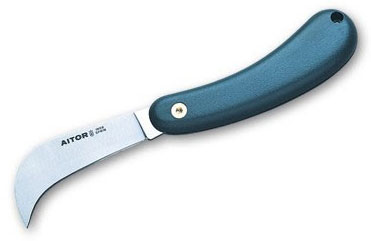
How to store fresh mushrooms
Mushrooms are perishable and spoil quickly. Ideally, consume them within 2 days. If you are not going to cook them right away, store them clean in the refrigerator. Place them in a container side by side, without piling, and cover with a cloth napkin or towel to allow ventilation.
Preservation methods to enjoy them year-round
Although autumn is the high season, you can enjoy mushrooms all year if you preserve them correctly:
- Freezing: Lightly sauté them in a hot pan with a little oil, let cool and then freeze in portions.
- Blanching and preserving: Blanch them in boiling water, drain, cool and then store in containers with oil, vinegar or aromatic herbs. Be cautious with home preserves to avoid botulism.
- Drying: Spread mushrooms on a tray in a sheltered place without direct sun. Once dry, store them in containers in the refrigerator.
Tips for safe and healthy consumption
- Always cook them: Never eat wild mushrooms raw; they can be indigestible or contain parasites/bacteria. Some edible species are toxic raw but harmless when cooked.
- Try small amounts: If it’s your first time eating a species, try a small portion to rule out allergies or intolerances.
- Moderate consumption: They are high in fiber and can be hard to digest in excess. A reasonable intake is 150–200 grams per week for an adult.
- Precaution for vulnerable groups: Not recommended for children, the elderly or pregnant women due to higher risk in case of poisoning or presence of parasites such as toxoplasmosis.
- Avoid “grandma tests” and old wives’ tales; sometimes they work, but many are dangerous myths.
V. What to do if you suspect poisoning?
Prevention is the best tool, but if you suspect mushroom poisoning, act quickly! Symptoms can vary and do not always appear immediately. Severe poisonings (for example from Amanita phalloides or Cortinarius orellanus) can have a long latency period (more than 6 hours, up to several days) and severely affect the liver or kidneys, even causing death.
If you suspect poisoning, for example gastrointestinal symptoms in several people who ate mushrooms:
- Go to a medical center or call the emergency number (061) immediately.
- Bring any remains of the mushrooms consumed (cooked or raw) or even vomit remains. This is vital so experts can identify the species and apply the most effective treatment.
- In case of poisoning go to the nearest health center and, if possible, bring a specimen of what you consumed. Otherwise, a photograph that helps identify the mushroom.
- Always keep an uncooked specimen of the mushrooms you intend to eat in the refrigerator. Detailed photos are also useful.
- Contact others who ate the same mushrooms to inform them.
Hospital Clínic Barcelona is a reference center for urine analysis of people poisoned by mushrooms, with a clinical toxicology protocol.
Enjoy mushrooms with knowledge and respect!
The world of mycology is truly fascinating and offers unforgettable experiences in nature, as well as delicious dishes for our table. However, ignorance can turn this exciting activity into a serious risk. Always remember the golden rule: if you have the slightest doubt, do not pick or eat it. The most delicious mushroom is not worth a poisoning!.
Educating yourself, seeking expert advice and respecting the delicate balance of our forest ecosystems are the pillars for enjoying mushrooms safely and sustainably. May your baskets be filled only with edible mushrooms and may your experiences always be safe and rewarding!
SEE MORE MUSHROOM KNIVES | SEE OTHER KNIVES FOR GARDENING AND MOUNTAIN