At the heart of survival and outdoor adventure, the ability to start a fire stands as a fundamental skill. And among the tools to achieve it, the flint stands out as an irreplaceable ally. But what exactly is the flint? How can we unleash its potential to create that vital spark? In this article we will unravel all the secrets of the flint, from its millennia-old history to the most modern techniques to master fire in any condition. Get ready to transform your understanding of this humble but powerful tool.
What Is Flint? A Journey Through History and Geology
Contents
The term flint takes us back to a fascinating history and a particular geology. Originally, flint (also known as chert/silex) is a microcrystalline sedimentary quartz rock characterized by extreme hardness. It is generally found associated with limestone deposits and its formation is related to the accumulation of remains of microscopic organisms in marine environments.
From primitive chert to modern ferrocerium: evolution of an essential tool
During the Stone Age, flint was the material of choice for making tools. Its ability to fracture into blades with incredibly sharp edges made it ideal for arrowheads, knives, scrapers and other cutting tools. This property, known as conchoidal fracture, allowed our ancestors to shape objects with surprising precision.
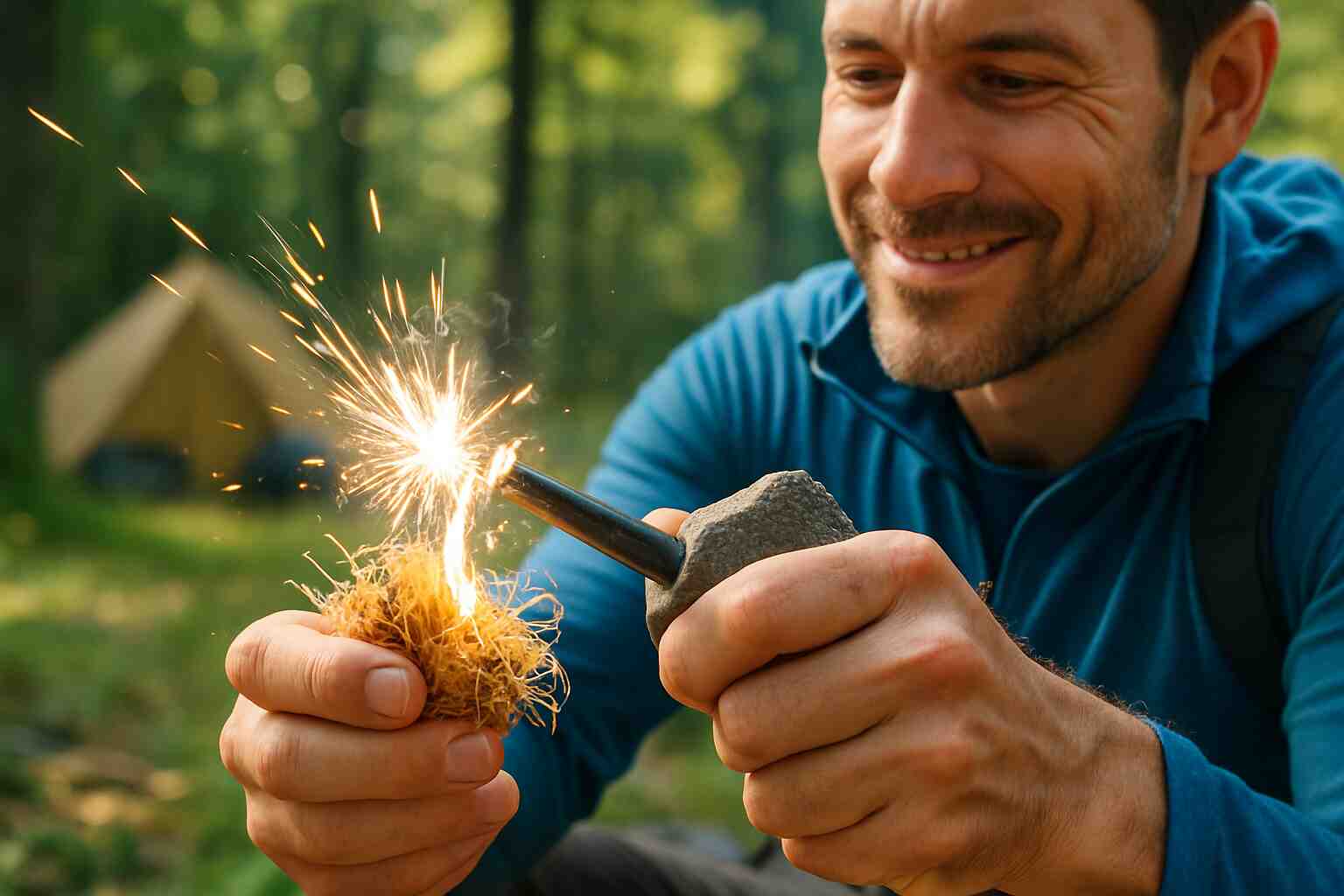
But flint was not only vital for farming and hunting; it was also a pioneer in fire-starting. When struck against another flint or against iron-rich metals (like pyrite), chert produced sparks. These sparks, although small, were enough to ignite dry tinder and, with a bit of skill, start a flame. Later, this same property led to its use in the first firearms—arquebuses and flintlock muskets—where a piece of flint struck a piece of metal to ignite the powder.
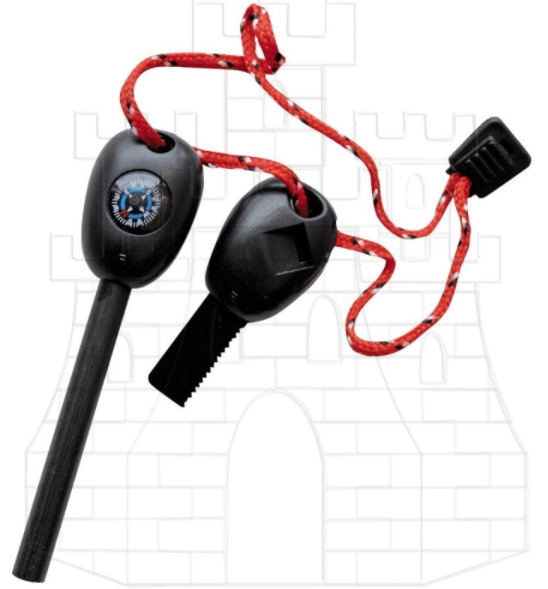
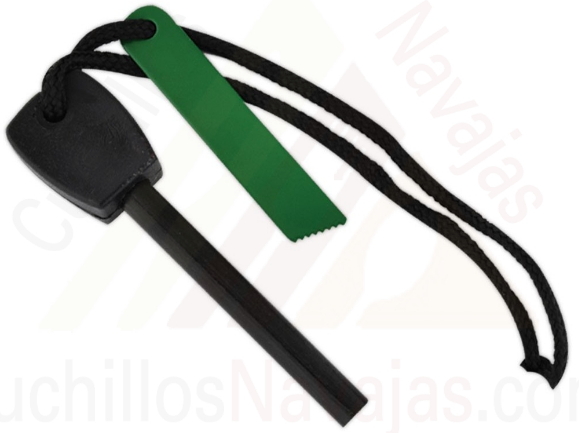
Today, when we talk about “flint” in the context of survival, we often refer to a modernized version: the ferrocerium rod. This material, an alloy of rare-earth metals (mainly iron and cerium), has revolutionized how we generate sparks. Unlike natural chert, which requires a precise strike against another material, ferrocerium produces a much more abundant and hotter shower of sparks (pyrophoricity) when scraped with a metal striker or the back of a knife. This characteristic makes it a superior tool for starting fires in adverse conditions, such as strong wind or humidity, and when other methods (matches or lighters) are not viable.
Flints and Survival Kits: Inseparable Companions
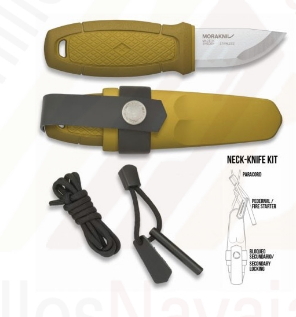
The importance of flint in extreme situations is undeniable. That is why many high-quality survival tools, such as some survival knives, folding survival knives, and even machetes and axes, include an integrated flint or include one as part of a kit. This synergy ensures the user always has the ability to light a fire at hand—essential for heating, cooking food, purifying water and signaling in an emergency. Carrying such an accessory in your emergency pack or camping gear is a smart and responsible decision.
Preparing the Scene: The Secret to Success
Before you even think about how to use a flint, it is crucial to understand that fire is more than sparks; it’s a combination of elements. Proper preparation is the key to success. A flint alone will not light a fire. You need fuel and, most importantly, tinder.
The Golden Fire Triad: Fuel, Oxygen and Heat
Remember the “fire triad”:
- Fuel: flammable material (tinder, firewood, etc.).
- Oxygen: present in the air.
- Heat: the flint’s spark provides this initial heat.
Our main focus will be fuel—specifically tinder and starter material. Without good tinder, your sparks will be useless.
The Perfect Tinder: Your Best Ally
Tinder is any very fine, highly flammable material that can ignite with a single spark. Think of it as the gateway to your fire. Some ideal examples include:
- Charred cotton (char cloth): This is the king of tinders. Easy to make (by burning cotton until it carbonizes in a sealed container), it lights with the slightest spark and burns slowly, allowing you to transfer the ember to larger materials.
- Fine wood shavings: Scraped from dry wood, especially from resinous trees like pine. The finer, the better.
- Coconut fiber or shredded bark: Natural materials that break down into very fine fibers.
- Dry, thin leaves or dry grass: Make sure they are completely dry.
- Birch bark strips: Birch bark is highly flammable even when damp due to its natural oils.
- Cotton balls with petroleum jelly: A survival classic. Petroleum jelly makes the cotton highly flammable and it burns longer.
- Tissue paper or shredded toilet paper: In an emergency, these can work.
Key tip: Always carry a small waterproof container or bag with prepared tinder. Don’t rely on finding dry tinder in nature, especially in wet weather.
Preparing the Nest: How to Organize Your Material
Once you have your tinder, you need to prepare a “nest” or “tinder pile.” This will be the place where your sparks fall and where the initial ember will nest. It should be large enough to hold the tinder and allow good airflow but not so large that sparks disperse.
On top of the tinder, place very small, dry twigs (as thin as noodles). Then, gradually add slightly thicker twigs, then thin sticks, and finally larger firewood. Think in layers, like an inverted pyramid or a tent, allowing air to circulate.
| Type of Flint | Main Material | Advantages | Disadvantages |
|---|---|---|---|
| Natural Flint (Chert) | Quartz (SiO2) | Extreme durability, historical, can be found in nature. | Requires a carbon steel striker (or pyrite), produces fewer and cooler sparks, steeper learning curve. |
| Ferrocerium Flint | Ferrocerium (rare-earth alloy) | Very abundant and hot sparks, works in any weather, easy to use, long-lasting. | Not found in nature, may be more expensive, requires a striker. |
Mastering the Technique: How to Use a Ferrocerium Flint Step by Step
The technique is relatively simple but requires practice to master. We’ll assume you’re using a modern ferrocerium rod, which is the most common and effective for survival.
Step 1: Firm Grip
Hold the ferrocerium rod firmly in one hand. You can brace it against the ground, a rock or your knee for more stability. The section you’ll scrape should be free and pointed towards your tinder.
Step 2: The Correct Striker
Use the striker provided with your flint. If you don’t have one, the spine (back, unsharpened part) of a bushcraft knife or a multi-use folding knife works perfectly. Avoid using the cutting edge of your knife, as it will dull it.
Step 3: The Right Angle and Pressure
There are two main techniques:
- Scrape-toward-the-tinder technique: Place the end of the ferrocerium rod just above your tinder. With the other hand, press the striker firmly against the rod at about a 45-degree angle and scrape forcefully downward, away from you, directly over the tinder. The goal is for the sparks to fall directly onto your tinder nest.
- Scrape-away-from-the-tinder technique (recommended for beginners and greater safety): Place the striker firmly on the ferrocerium rod, near the end farthest from you. With the striker fixed, pull the ferrocerium rod back, away from the tinder, keeping the striker still. This pushes the sparks forward, directly onto your tinder, and gives you more control by moving the hand holding the striker away from the spark area. This technique is especially useful when your flint rod is short.
Experiment with pressure and speed to find the optimal point where you produce the most sparks.
Step 4: Catching the Spark
Once you see the tinder has caught a spark and begins to smoke (forming a small glowing ember), gently blow on it. This soft blow will provide the oxygen needed for the ember to grow and become a small flame. With practice, this step will become intuitive.
Step 5: Feeding the Flame
When you have a stable flame, carefully transfer it to your tinder pile with the smallest twigs. Continue blowing gently and feeding the fire gradually with larger twigs and then firewood. Do not rush this process; patience is key to building a solid fire.
| Situation | Preparation Tip | Technique Adjustment |
|---|---|---|
| Strong Wind | Create a natural windbreak (rocks, backpack, your body). Use tinder that burns longer (cotton with petroleum jelly). | Ensure your tinder is compact and protected. Focus all sparks on a tiny point. Blow gently from the side opposite the wind. |
| Humidity / Rain | Use waterproof tinder you carry with you (cotton with petroleum jelly, commercial fire starters). Look for dead, dry wood under fallen logs or inside trees. Remove the wet outer bark from twigs. | Be meticulous in preparing your tinder. Ferrocerium sparks are very hot and can ignite slightly damp materials, but the tinder must be as dry as possible. Patience. |
| Extreme Cold | Same precautions as for humidity, since cold slows the drying of materials. Longer-burning tinder is preferable. Some fuels like solid alcohol can help. | Make sure your hands are warm and nimble to handle small materials. Patience is crucial as the process may take longer. |
| Limited Tinder Materials | Scrape the wood into extremely fine shavings. Look for dried plant fluff or the inner bark of some trees. | Maximize the number of sparks that fall directly onto the available material. Concentrate the scraping on a single point to ensure the spark takes. |
Advanced Tips and Flint Maintenance
The Importance of Practice
Don’t wait for your first emergency to try using a flint. Regular practice is the only way to develop the skill and confidence needed. Practice in different conditions (light wind, controlled humidity) to become familiar with the challenges.
Flint Maintenance
- Clean your rod: After use, you can remove any residue or soot with a cloth.
- Store it dry: Although ferrocerium flints work well when damp, it’s good practice to keep them in a dry place to avoid long-term corrosion, especially if they contain steel components.
- Use the full length: Don’t limit yourself to only one part of the rod. Use its entire length to maximize the life of your flint.
Natural Flint: For Purists and Tradition Lovers
Although ferrocerium is more practical, mastering natural flint with carbon steel has a special charm. The technique is similar, but instead of scraping ferrocerium, you will strike a piece of steel in a downward motion against the sharp edge of the flint, directing the sparks toward the tinder.
Safety First
Always practice fire-starting in a safe area, away from unwanted flammable materials. Keep water or soil at hand to fully extinguish the fire once you have finished practicing. Never leave a fire unattended.
Flint: More Than a Tool, an Essential Skill
Mastering the use of flint is more than learning a technique; it’s acquiring a vital skill that can make the difference in a survival situation. It connects you to ancestral practices and gives you invaluable self-reliance. By understanding the science behind fire and practicing patience and observation, flint becomes an extension of your will, allowing you to generate heat and light wherever you are.
So, the next time you venture outdoors, consider carrying a good flint. Not only will it give you the security of being able to start a fire, but it will also give you the satisfaction of mastering one of humanity’s most primitive and essential skills. And remember, if you need a quality flint or any other survival gear, in our online store you will find a wide selection to properly equip you for your next adventure.
SEE ALL FLINTS | SEE SURVIVAL KNIVES | SEE FOLDING SURVIVAL KNIVES